
You’ve decided not to rip it. Now where do you put it?
Collectors spend a lot of time thinking about how to protect individual cards, but sealed sports card products need protection too. Heat, humidity, sunlight, water, and physical damage can affect both the cards inside and the condition of the original packaging. Whether you’re holding a hobby box for six months or building a long-term sealed wax collection, proper storage matters.
What Is the Best Environment for Sealed Wax?
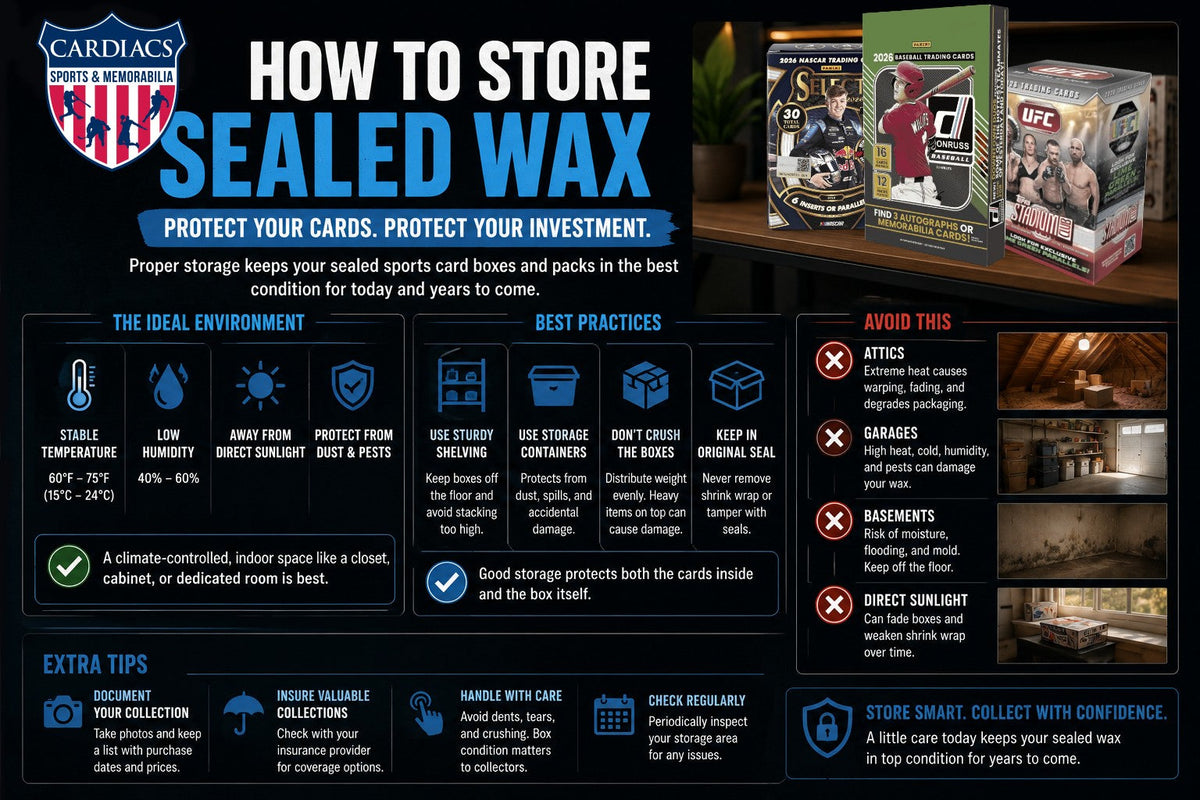
The best place to store sealed trading cards is generally a stable, climate-controlled indoor environment. The goal isn’t to create museum conditions. It’s to avoid extremes.
Your sealed wax should be protected from:
- High temperatures
- Excessive humidity
- Rapid temperature changes
- Direct sunlight
- Water
- Crushing
- Dust and dirt
- Pests
A closet, cabinet, shelving system, or dedicated collection room inside the climate-controlled portion of your home is generally preferable to an attic, garage, shed, or damp basement.
Avoid Attics
Attics can experience major temperature fluctuations. Even if the rest of your home is comfortable, attic temperatures can become dramatically hotter during warm weather. Long-term exposure to heat isn’t ideal for trading cards, packaging, adhesives, or shrink wrap. For valuable sealed products, choose a more temperature-stable location.
Be Careful With Garages
Garages present similar problems.
Depending on the climate, a garage can experience:
- Heat
- Cold
- Humidity
- Condensation
- Dust
- Pests
- Temperature swings
If your garage isn’t climate controlled, it’s generally not our first choice for long-term sealed wax storage.
Basements Require Extra Caution
A climate-controlled finished basement may be perfectly suitable. A damp basement isn’t. Basements can present additional risks from humidity and water intrusion. If you store collectibles in a basement, keep them off the floor. A leaking appliance, plumbing problem, or heavy rainfall can cause significant damage before you realize there’s a problem.
Keep Sealed Wax Away From Direct Sunlight
Sunlight can fade packaging over time. That matters particularly if you’re maintaining sealed products as collectibles. Don’t place valuable boxes directly in front of windows or where they receive hours of direct sunlight. A closed cabinet, closet, or protected shelf is a better option.
Should Sealed Wax Be Stored in Plastic Containers?
Plastic storage containers can provide another layer of protection from dust, spills, and physical damage. But don’t treat a plastic tote as a substitute for climate control. Putting sealed wax inside a tote and then placing that tote in a hot attic doesn’t solve the temperature problem. Use containers in addition to a suitable storage environment.
Don’t Crush Your Boxes
Sealed wax can be heavier than it looks when you’re storing multiple boxes. Avoid building tall stacks where the weight of the products above can damage boxes underneath.
This is especially important with:
- Older wax
- Premium hobby boxes
- Thin cardboard packaging
- Products with collectible packaging
Use sturdy shelving and distribute weight appropriately.
Does the Condition of the Box Matter?
If you’re keeping sealed wax as part of your collection, yes.
Collectors may care about:
- Crushed corners
- Torn shrink wrap
- Dents
- Creases
- Fading
- Price stickers
- Damaged seals
A perfectly intact product can be more desirable to a sealed collector than the same product with significant packaging damage. That means you’re protecting two things at once, the cards inside and the sealed collectible itself.
Should You Remove the Shrink Wrap?
No. If you’re collecting the product as sealed wax, leave the manufacturer’s original packaging intact. Removing original shrink wrap or seals defeats the purpose of maintaining the product as factory sealed.
How Should Individual Sealed Packs Be Stored?
Loose unopened packs need physical protection as well. Avoid bending, crushing, or stacking heavy items on top of them. Depending on the size and age of the pack, collectors may use appropriately sized sleeves, protective holders, boxes, or other archival storage solutions. The primary goal is to keep the pack flat, protected, and away from damaging environmental conditions.
Should You Use Silica Gel?
Humidity-control products can be useful in some storage situations, but they shouldn’t compensate for a fundamentally unsuitable environment. If your storage space has persistent high humidity, address the environmental problem rather than relying exclusively on packets inside a storage container.
Don’t Forget About Insurance and Documentation
If your sealed collection becomes substantial, document what you own.
That may include:
- Photographs
- Purchase receipts
- Product names
- Years
- Quantity
- Purchase price
For particularly valuable collections, consider discussing appropriate coverage with your insurance provider.
A Simple Sealed Wax Storage Setup
You don’t need an elaborate system. For many collectors, a good setup is simply:
- Climate-controlled room
- Sturdy shelving or cabinet
- Protective storage containers as needed
- Sealed products organized without excessive stacking
Keep valuable products off the floor and away from windows, plumbing, exterior moisture, and major heat sources.
The Bottom Line
Sealed wax doesn’t require complicated storage. It requires a stable environment and protection from the things most likely to damage it. Keep your unopened cards indoors, climate controlled, dry, away from direct sunlight, and protected from crushing. And remember: if you’re collecting sealed wax, the box itself is part of the collectible. Protect it accordingly.
Quick Answer
Store sealed sports card boxes and packs in a stable, climate-controlled indoor environment away from heat, humidity, direct sunlight and water. Keep valuable products off the floor, avoid excessive stacking, and protect the original packaging from crushing, tears and fading.